Both Iran and Turkey mine bentonite and make good clumping cat litter, so the country of origin does not decide quality on its own: the mine, the processing and the supplier do. Turkey has the larger and longer-established litter export industry. Iran is closer to many buyers in the Gulf, Iraq and Central Asia, and Iranian producers often compete on price. Compare suppliers on their data sheet, certificates and delivered price, not on the country name.
Iran and Turkey are the two bentonite origins most buyers in the region compare. This guide sets them side by side so you can decide which suits your market, and which questions to ask any supplier from either country.
The raw material in both countries
Turkey is one of the world's larger bentonite producers, with mines across Anatolia. Iran also has substantial deposits, including in Semnan province, where the FELUXE group mines its own clay. Both countries have sodium bentonite, which swells and forms firm clumps, and calcium bentonite, which clumps more weakly. Both also sell sodium-activated calcium bentonite. For a buyer, the type of clay and its montmorillonite content matter far more than the country it came from.
Not sure which type you are being offered? Our guide to sodium vs calcium bentonite explains the difference and how to test for it.
Iran and Turkey side by side
| Factor | Iran | Turkey |
|---|---|---|
| Clay | Sodium and calcium deposits; FELUXE uses natural sodium bentonite | Sodium and calcium deposits; natural and activated grades on the market |
| Export industry | Smaller; a growing number of exporting factories | Large and established, with many brands and private-label makers |
| Route to the GCC | Short sea crossing from southern Iranian ports to the UAE and Oman | Longer sea route via the Suez Canal, or by truck |
| Route to Iraq | Long shared land border | Land border with northern Iraq |
| Central Asia | Overland via Iran's northern and eastern borders | Overland via the Caucasus |
| Price | Often competitive, helped by low energy costs for drying | Wide range, from economy to premium brands |
| Payment | Agree the payment method and banking route before production; many Gulf and Iraqi importers already have one in place | Letters of credit and standard bank transfers are common |
| Certification | Varies by factory; FELUXE holds the Iran Veterinary Organization License and ISO 9001 | Varies by factory; ask for ISO 9001 and product test reports |
Quality depends on the factory, not the flag
Good and poor litter come out of both countries. Before you compare prices, compare these:
- Own mine or bought clay. A factory that mines its own bentonite can keep the raw material consistent from batch to batch.
- Published specs. Absorption, montmorillonite content, swell index, granule size and dust, with the test method. See how to read a cat litter spec sheet.
- Dust control. Screening out undersized granules and extracting dust in the plant makes a visible difference in the bag.
- Certificates. ISO 9001 as a minimum, and ideally a veterinary or health-authority licence for the product.
- Samples that match bulk. Test a sample, then check the first shipment against it.
When each origin makes more sense
Iranian litter often fits buyers in Iraq, the UAE, Oman, Qatar, Central Asia and the Caucasus who want short transit times, Arabic or Russian private-label packaging and a competitive delivered price on volume orders.
Turkish litter often fits buyers in Europe, buyers who want to choose from many established brands, and importers whose bank only supports certain payment routes.
Where FELUXE fits
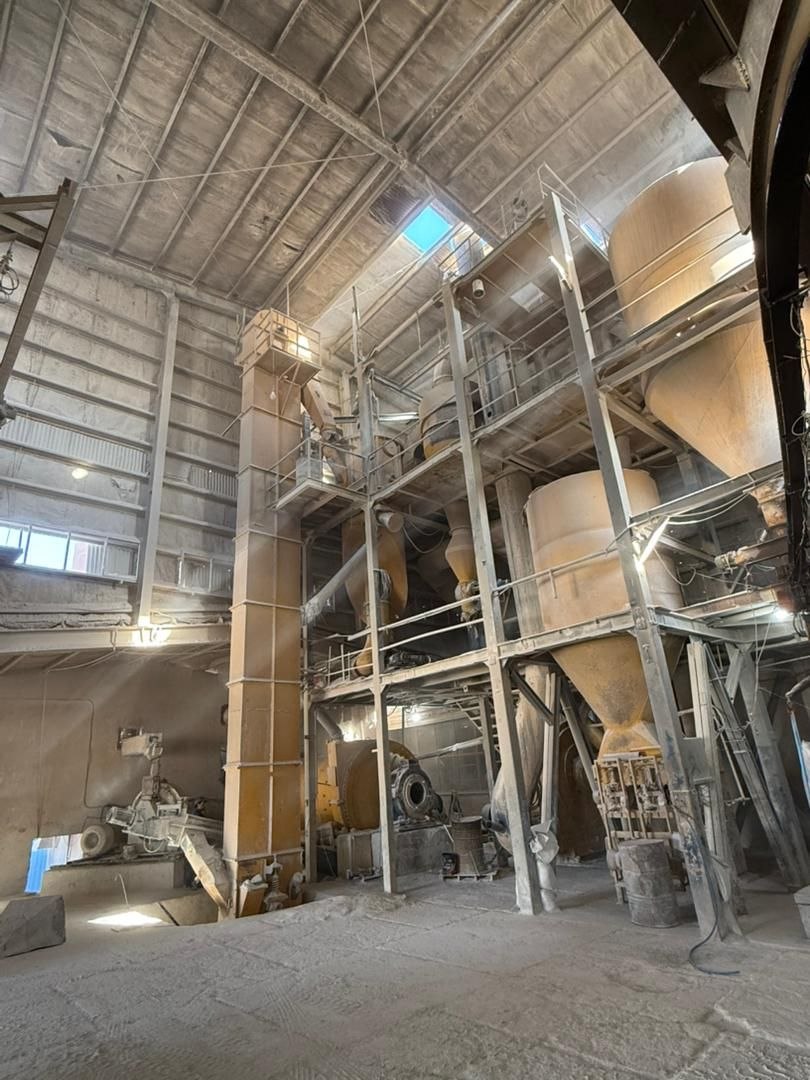
FELUXE is made by Sanayeh Poodr Sangsar (SPS), which mines its own natural sodium bentonite in Semnan province and runs milling, drying, screening and packing in its own plant. It is the only cat litter factory in Iran with the Iran Veterinary Organization License, and it holds ISO 9001. Absorption reaches up to 800%, montmorillonite content is 80 and granules are 0.6–3.1 mm. We supply private label and 1-ton bulk bags across the Middle East and Central Asia.
Comparing more than two origins? See how cat litter exporters in the Middle East compare, including China and Europe.
Frequently asked questions
Is Iranian cat litter as good as Turkish cat litter?
It can be. Both countries have high-quality sodium bentonite, and quality depends on the mine and the factory. Compare the absorption, montmorillonite content, swell index and dust figures on each supplier's data sheet, and test samples. FELUXE, from Iran, reaches up to 800% absorption with 80 montmorillonite content.
Which is cheaper, Iranian or Turkish cat litter?
Iranian producers often quote competitively, helped by low energy costs for drying the clay. The figure that matters is the delivered price to your port or city, including freight, so ask every supplier for a delivered quote on the same volume and pack size.
Is Iranian bentonite sodium or calcium?
Iran has both. FELUXE uses natural sodium bentonite from its own mines in Semnan province, which swells strongly and forms firm clumps.